


















The Rise of Prefabricated Cleanrooms in Vietnam: Revolutionising the Healthcare and Manufacturing Sectors
Prefabricated cleanrooms in Vietnam are transforming healthcare and manufacturing by offering faster, cost-effective, and customizable solutions for growth.

In the world of advanced manufacturing, biotechnology, pharmaceuticals, and electronics, cleanrooms are a fundamental element for ensuring high-quality, contamination-free production environments. With the growing demand for cleanroom technology, particularly in Asia, Vietnam is emerging as a key player. In this blog, well explore how prefabricated cleanrooms are reshaping industries in Vietnam, their advantages, and the role they play in driving economic growth and innovation.
Understanding Prefabricated Cleanrooms
Cleanrooms are controlled environments designed to maintain specific levels of cleanliness by minimising the presence of airborne particles, pollutants, and contaminants. These spaces are critical in various industries, particularly pharmaceuticals, biotechnology, and semiconductor manufacturing, where even the smallest contaminant can have disastrous consequences.
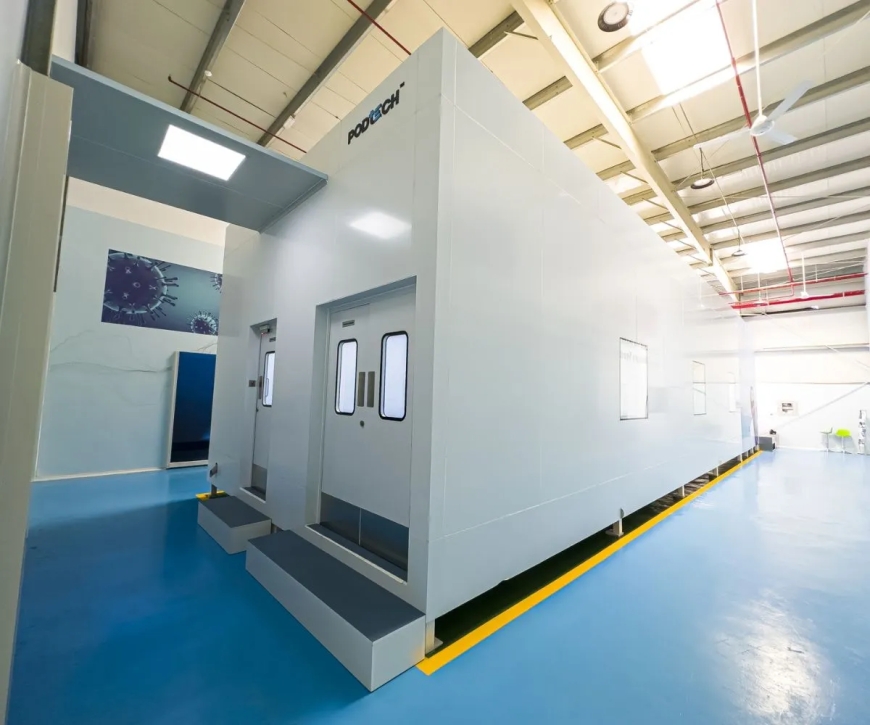
Prefabricated cleanrooms are modular, factory-built structures designed for fast assembly and deployment on-site. Unlike traditional cleanrooms, which are constructed from the ground up, prefabricated cleanrooms are pre-engineered and manufactured in controlled environments, then transported to the location for installation. This method dramatically reduces construction time, costs, and the complexity typically associated with building a cleanroom.
The Growing Need for Cleanrooms in Vietnam
Vietnam's position as an emerging hub for global manufacturing, especially in industries like electronics, pharmaceuticals, and food processing, has placed immense pressure on companies to adopt stringent quality standards. With its growing economy and investment from multinational corporations, Vietnam has become a prime location for advanced manufacturing technologies, including cleanroom facilities.
The demand for cleanrooms in Vietnam can be attributed to several key factors:
- Pharmaceutical Growth: With an expanding domestic market and increasing export opportunities, the pharmaceutical sector in Vietnam requires contamination-free spaces for drug production and testing.
- Electronics Manufacturing: Major global electronics companies have invested heavily in Vietnam. Cleanrooms are essential in the production of semiconductors, displays, and other sensitive electronic components.
- Biotechnology and Healthcare: The healthcare sector, particularly in biotechnology research, requires cleanrooms to maintain contamination-free environments for the production of vaccines, medical devices, and advanced diagnostics.
- Food and Beverage Industry: The food and beverage sector, particularly in the production of packaged goods and health supplements, is increasingly seeking cleanroom technology to maintain hygienic standards.
Advantages of Prefabricated Cleanrooms in Vietnam
1. Faster Installation and Setup
The main appeal of prefabricated cleanrooms is their ability to be installed quickly. Traditional cleanroom construction can take months, often delaying production schedules. In contrast, prefabricated cleanrooms are pre-engineered, which reduces installation time to just weeks. This rapid deployment enables businesses to start operations faster and meet growing demands.
2. Cost-Effectiveness
The cost of building a traditional cleanroom from scratch can be prohibitively expensive due to high labour costs, long construction times, and expensive materials. Prefabricated cleanrooms offer a more cost-effective solution. Since they are manufactured in controlled environments, they require fewer resources and can be delivered at a lower cost. This makes them an attractive option for both small businesses and larger enterprises seeking to optimise their capital expenditures.
3. Customisation and Flexibility
Prefabricated cleanrooms can be customised to meet specific industry requirements, ensuring that the rooms air quality, temperature, humidity, and particle levels are tailored to the needs of the business. Moreover, these cleanrooms are modular in design, meaning that they can be expanded or reconfigured easily as business requirements evolve. This flexibility is particularly beneficial in fast-changing industries where production lines and technologies are constantly adapting.
4. High Quality and Consistency
One of the significant advantages of prefabricated cleanrooms is the high level of quality control during manufacturing. Prefabricated units are produced in factories that follow strict quality standards, ensuring that the components are flawless. Once installed, they are capable of maintaining a controlled environment with precise particle filtration, air velocity, and temperature regulation. For industries where contamination control is paramount, this consistency ensures compliance with international standards and regulations.
5. Energy Efficiency
The design of modern prefabricated cleanrooms is focused on energy efficiency. With features like energy-efficient HVAC (heating, ventilation, and air conditioning) systems, these cleanrooms consume less energy while still maintaining optimal environmental control. This makes them an ideal choice for businesses in Vietnam, where energy costs are a growing concern. Moreover, energy-efficient cleanrooms are more environmentally friendly, helping companies to meet sustainability goals and reduce their carbon footprint.
Impact on Vietnams Economic Development
The increasing demand for prefabricated cleanrooms has brought several positive impacts to the Vietnamese economy.
1. Attracting Foreign Investment
With the availability of cleanroom solutions, Vietnam has become an attractive destination for multinational companies. Investors looking to establish operations in the country can quickly set up manufacturing plants with high standards of cleanliness and safety, enhancing Vietnams competitiveness in global markets. The flexibility and cost-effectiveness of prefabricated cleanrooms make the country an appealing option for industries such as electronics, pharmaceuticals, and biotechnology.
2. Job Creation and Skills Development
The adoption of cleanroom technologies has also created opportunities for the local workforce. From installation engineers to cleanroom operators, the demand for skilled workers in cleanroom construction and management has risen. This has driven the development of specialised training programs, thus helping to boost the skills and employability of Vietnamese workers.
3. Fostering Innovation
The cleanroom sectors growth in Vietnam has also spurred innovation, as businesses explore new ways to improve manufacturing processes, reduce costs, and increase production efficiency. Cleanrooms have enabled industries to develop cutting-edge products and technologies, such as advanced medical treatments, electronic devices, and semiconductors, contributing to Vietnams emergence as a technological and industrial leader in Southeast Asia.
Conclusion
The advent of prefabricated cleanrooms in Vietnam represents a pivotal development in the country's manufacturing and healthcare sectors. By offering faster setup times, lower costs, and customizable solutions, these cleanrooms are transforming the way businesses in Vietnam operate. As the country continues to attract foreign investment and expand its technological capabilities, the role of cleanroom technology will only become more pronounced, offering businesses a strategic advantage in meeting global standards of quality and safety. With its combination of innovation, efficiency, and adaptability, prefabricated cleanrooms are indeed paving the way for Vietnam's future in advanced manufacturing.